
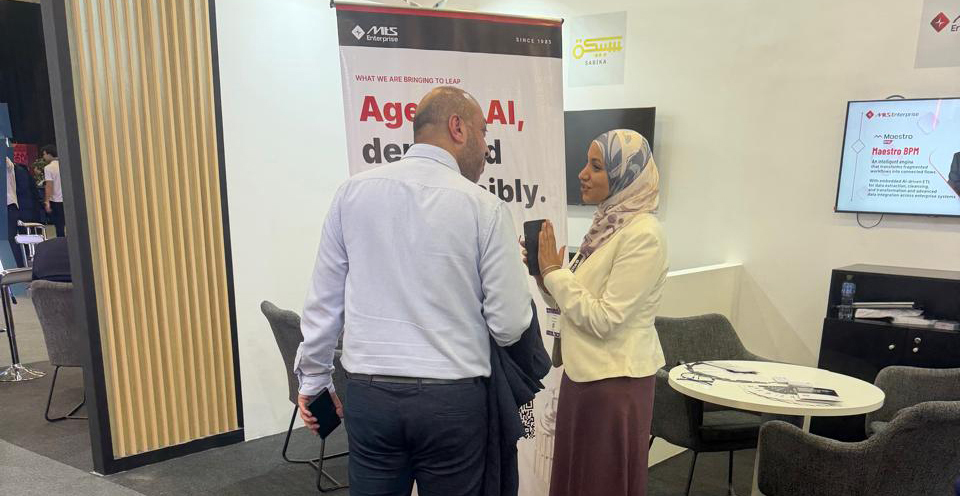
LEAP has become the room where the region’s ambition is visible all at once. Four days, tens of thousands of people, and an agenda that spans everything from sovereign cloud to national AI programmes. It is a useful place to take the temperature of a market, precisely because so much of it is in one building at the same time.
We spent those four days at Hall 3 talking to network operators, bankers, public sector leaders, and the engineering teams who keep their institutions running. What stayed with us afterward was not the scale of the event. It was a shift in the kind of question people were asking.
From capability to control
For most of the last decade, the dominant question at technology events was some version of what can this do. What can the platform handle, what can the model generate, what becomes possible that was not possible last year. It is an exciting question, and it sold a great deal of software.
The conversations we had this year sounded different. Fewer questions about capability, and many more about control. How do we keep this accountable once it is running. Who owns it when the programme team has moved on. What happens on the day it does not work. How do we prove to a regulator that it did what we say it did.
Those are harder questions. They are also better ones, because they are the questions that determine whether a system is still delivering value in year five.
This is a sign of a maturing market rather than a cautious one. Institutions across the region have now lived through enough transformation programmes to know how they actually fail. Rarely at launch. Usually somewhere in year two or three, quietly, when the people who understood the system have moved on and nobody can fully explain how it works anymore.
Ambition at national scale is a governance problem
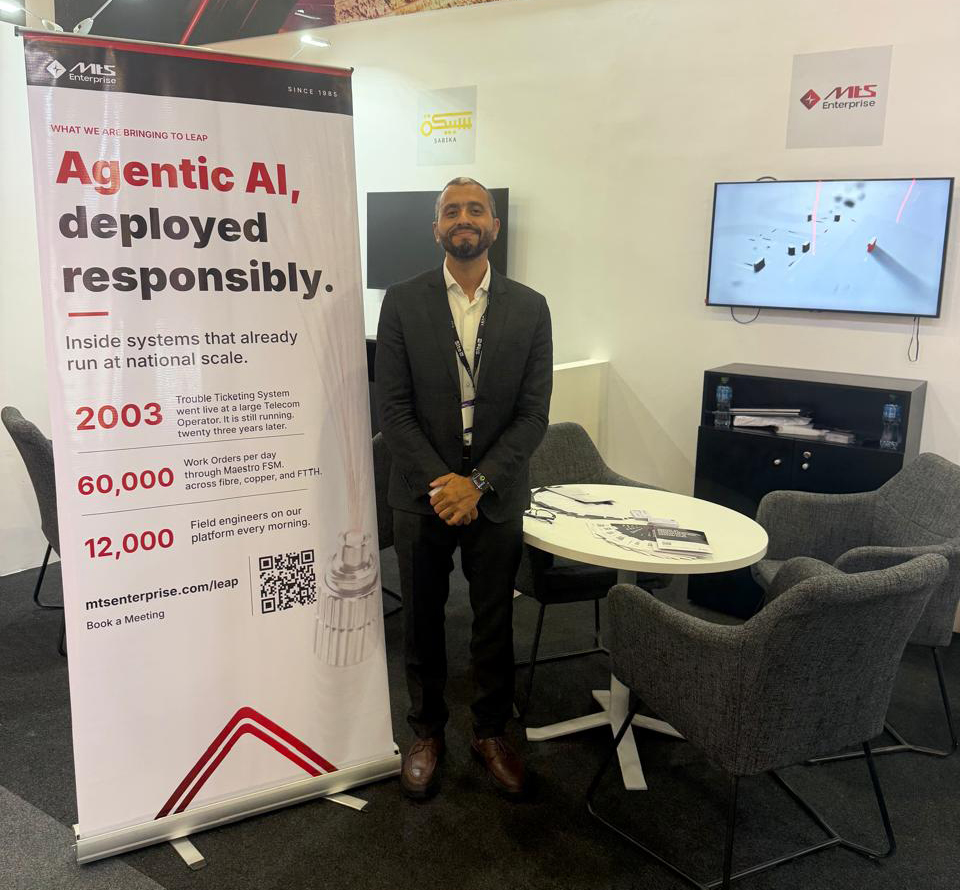
The other thing that becomes obvious at an event like LEAP is the sheer scale of what is being attempted. These are not departmental projects. They are national systems, built to serve entire populations, with the expectation that they will remain sovereign, auditable, and dependable for decades.
At that scale, the binding constraint is rarely whether something can be built. The engineering is usually the solvable part. The harder question is whether the operation around it can be governed: whether accountability is clear, whether the audit trail exists as a by-product of the work rather than an afterthought, whether the process survives a leadership change, a regulatory review, and a decade of growth all at once.
That is what we mean when we say national transformation is a governance problem wearing a technology budget. It is not a criticism of ambition. It is a description of where the risk actually sits.
What this means in practice
If the questions have changed, the way solutions are evaluated should change with them. Three tests are worth applying to any significant programme before it is approved, and they have very little to do with features.
The first is ownership. Not who sponsors the project, but who owns the operation on an ordinary day two years from now, once the excitement has faded and the external teams have gone.
The second is failure. Every system fails somewhere. A governed one fails in a way that is visible, contained, and recoverable. An ungoverned one fails quietly, and the institution learns about it from a customer or a regulator.
The third is proof. If the programme cannot produce a defensible record of what it did and why, it will pass its go-live and fail its first audit. Provability is not a compliance extra that gets added later. It is a property the system either has from the beginning or does not have at all.
Why this is familiar ground
We have been building and governing mission-critical systems since 1985: national telecom networks, core financial systems, and public institutions where failure is not an option. That work has always been less about the newest capability and more about the discipline of keeping complex systems accountable over long periods of time.
So it was encouraging, frankly, to find so many people asking about it directly. The conversation the market is now having is the one we have been having with institutions for four decades. It is simply being had more openly, and by more people, than it used to be.
The conversation continues
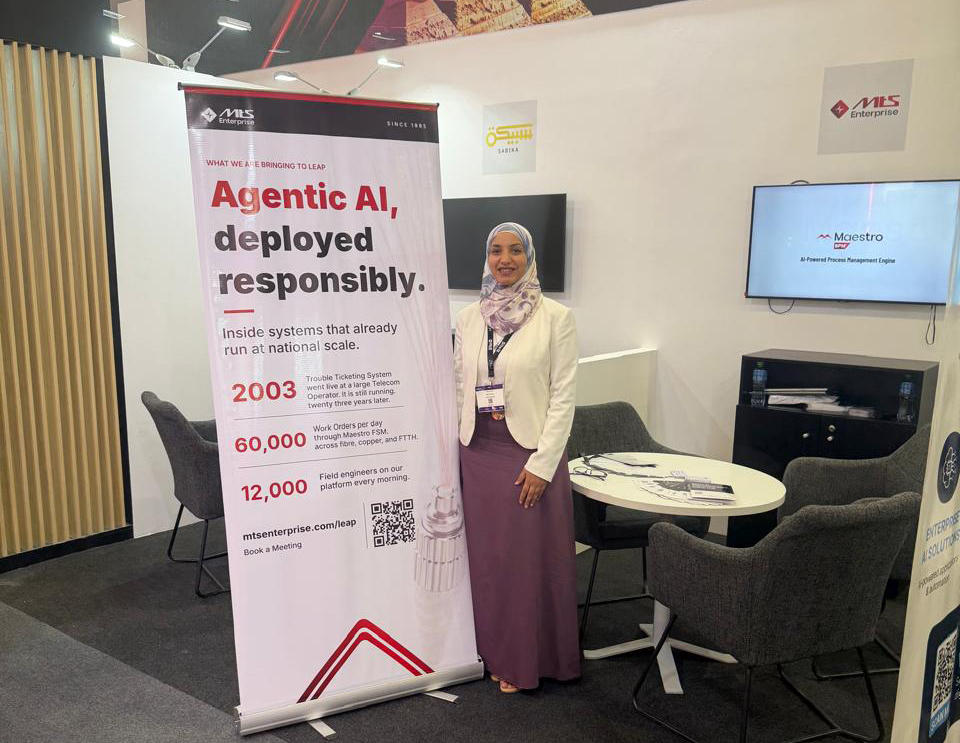
Thank you to everyone who stopped by Hall 3 and gave us their time. Events like LEAP are valuable less for what is announced on stage and more for the honesty of the conversations that happen on the floor.
If you are responsible for a system that cannot fail, and the questions above are the ones on your mind, we would be glad to continue the conversation.


Leave A Comment